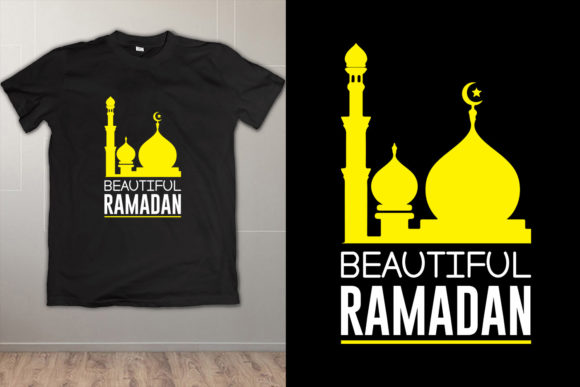
Reviewing the Beautiful Ramadan T Shirt Design
As an embroidery designer who has spent years digitizing motifs and troubleshooting stitch-outs for small business owners, I approach every new Beautiful Ramadan T Shirt Design with a mix of curiosity and caution. The market is flooded with seasonal graphics, but few hold up under the scrutiny of actual needlework. When I first opened the files for this specific design, my immediate goal was not just to admire the aesthetics, but to determine if it would translate effectively from a digital screen to a tangible, stitched finished product.
The visual personality of this design is warm and inviting, capturing the spiritual essence of the holy month without relying on overly complex geometric patterns that often cause stitching headaches. The layout feels balanced, with a quote saying that serves as the focal point. For those of us in the craft business, this balance is crucial. It means the design can stand alone on a plain garment or serve as a sophisticated accent on a more elaborate piece. As part of the broader category of Print Templates and Graphics, this asset offers versatility, but its true value lies in how it performs when subjected to the physical constraints of embroidery hoops and thread tension.
First Impressions and Visual Mood
The mood created by this Beautiful Ramadan T Shirt Design is one of serene celebration. It avoids the clutter that plagues many holiday-themed assets. Instead, it offers clean lines and a clear hierarchy of elements. When evaluating a design for real project use, I look at the detail level. Is it too dense for a lightweight cotton? Is the lettering thin enough to break during washing? From what I can see in the preview, the design maintains a professional look that appeals to both modern minimalist tastes and traditional sensibilities.
This visual clarity is essential for anyone creating a handmade product intended for sale. Customers buying an Etsy seller’s item are looking for quality and legibility. A muddy or overly complicated design can look cheap once stitched out. This design, however, suggests a high level of craftsmanship. It feels like something that would enhance a boutique brand rather than detract from it. The theme is unmistakably Ramadan, yet the execution is subtle enough to be worn beyond the immediate holiday festivities, adding value to the custom apparel you produce.
Real-World Application: The Custom Tote Scenario
To truly test the viability of any design, I imagine it in a specific production scenario. Let’s say I am preparing a batch of canvas tote bags for a local community center’s Ramadan charity drive. I need a design that is impactful but not so dense that it warps the fabric. Here, the Beautiful Ramadan T Shirt Design shines. The open spaces within the lettering and surrounding elements allow the natural texture of the canvas to show through, preventing that stiff, cardboard-like feel that heavy fill stitch areas can create.
If I were using this for a sweatshirt embroidery project, the design’s scale seems appropriate for the chest or upper back. The quote is readable from a distance, which is vital for apparel. For a personalized gift, such as a baby’s onesie, I would need to be more careful. While the design is beautiful, I would likely reduce the size significantly. In such cases, checking the stitch density becomes paramount. If the original file is optimized for larger garments, shrinking it for baby embroidery might cause the stitches to merge, losing the definition of the quote. This is where the designer’s eye must intervene, perhaps simplifying the stitch types or choosing a finer thread weight.
Navigating Fabric and Hoop Constraints
One of the most critical aspects of using any digital embroidery file is understanding its limitations on different materials. This design appears to work well on stable fabrics like cotton twill, denim, or canvas. However, when moving to stretchy fabrics like jersey knits for t-shirts, stabilization is key. I would recommend using a cut-away stabilizer to ensure the design remains crisp after multiple washes. The thread colors chosen will also play a massive role in the final outcome. High contrast threads, such as gold on navy or white on black, will highlight the design’s elegance. Low contrast combinations might cause the intricate details to get lost.
Curved surfaces present another challenge. If you plan to use this on a cap, you must consider the hoop size and the curvature of the crown. A design that looks flat and perfect on a screen can distort when wrapped around a curve. I advise testing the Beautiful Ramadan T Shirt Design on a scrap piece of the same fabric stretched in your specific hoop before committing to the final garment. This step saves time, thread, and client trust. For textured fabrics like linen or waffle knit, a simpler stitch type like a running stitch or light satin stitch border might be preferable to heavy fills, ensuring the fabric’s texture isn’t completely obscured.
Commercial Viability and Brand Consistency
For small shop product creators and craft business owners, consistency is the backbone of brand identity. Using a cohesive set of design assets helps build recognition. This design fits seamlessly into a collection of holiday-themed items. Whether you are creating embroidered patches for jackets or tote bag design concepts for spring markets, the professional quality of this graphic elevates the perceived value of the item. It signals to the buyer that care was taken in the selection and execution of the design.
When selling commercial embroidery services, clients often ask for mockups. Since this product includes high-resolution EPS and SVG files, you can easily create printable mockups to show clients how the design will look on various garments before a single stitch is made. This capability is a huge time-saver and helps manage customer expectations. It allows you to present a polished, professional proposal, increasing the likelihood of closing the sale. The inclusion of these vector formats alongside the embroidery-ready concepts makes this a versatile tool in your digital arsenal.
Practical Designer Notes for Best Results
Before you load this design into your machine, take a moment to review the technical specifics. Although the product description highlights the inclusion of EPS and SVG files at 300 dpi, it is crucial to confirm if a native embroidery file format (such as PES, DST, or JEF) is provided or if you need to digitize it yourself from the vector graphics. If you are digitizing from the SVG, pay close attention to the stitch density and underlay settings. Auto-digitizing can sometimes result in excessive stitch counts that compromise fabric integrity.
- Test on Scrap Fabric: Always run a test stitch-out on the same material and stabilizer combination you plan to use for the final product.
- Check Thread Contrast: Use a color chart to simulate how the design looks in different thread combinations, especially on dark versus light fabrics.
- Inspect Small Details: Zoom in on the quote’s lettering. Ensure that thin lines are thick enough to be stitched cleanly without breaking.
- Verify Licensing: Confirm the license terms for commercial use. Ensure you are allowed to sell finished items featuring this design on platforms like Etsy or in physical boutiques.
- Adjust for Hoop Size: If the design is large, consider splitting it or resizing it to fit your available hoop sizes without distorting the aspect ratio.
In conclusion, the Beautiful Ramadan T Shirt Design is a strong contender for your seasonal lineup. It offers the aesthetic appeal needed for attractive holiday embroidery projects while maintaining the structural simplicity required for reliable stitching. By approaching it with a practical mindset—testing fabrics, adjusting densities, and respecting the limitations of your machinery—you can transform this digital asset into a stunning physical product that resonates with customers and enhances your brand’s reputation for quality.